Supporting Your Pet at Home: Practical Care While Dr. Kho Is on Leave

Before we get into this month's topic, a personal note. After this week (October 16, 2026), I'll be stepping away from practice to go on maternity leave. Barring any complications, I plan to be back with all of you after the new year.

I know many of you have pets on regular treatment schedules, and that continuity matters.
So this month's blog is dedicated to exactly that question: what you can do at home to keep your pet comfortable while I'm out, and what options remain available to you in the meantime.
Laser Therapy Will Be Available While I'm Out
First, the most important piece of news: Dr. Tyler Pelfrey, DVM, will be offering laser therapy to my patients at Louisville Veterinary Urgent Care during my leave.
Dr. Pelfrey brings advanced training in emergency medicine and served as a Senior Emergency Clinician at BluePearl Louisville before founding Louisville Veterinary Urgent Care in 2023.
His practice is Fear Free Certified, which means his team is specifically trained to minimize stress and anxiety during visits, something I know matters a great deal to many of you, particularly those with cats or anxious dogs.
Laser therapy (sometimes called photobiomodulation) uses specific wavelengths of light to reduce inflammation, support tissue healing, and modulate pain signaling. It works through different mechanisms than acupuncture, but it addresses many of the same clinical problems: arthritis pain, soft tissue injuries, post-surgical recovery, and chronic inflammatory conditions.
For pets who have been receiving regular acupuncture, this is a genuinely good option to bridge the gap.
Here is the general contact information for Louisville Veterinary Urgent Care:
Louisville Veterinary Urgent Care
12937 Shelbyville Rd #101
Middletown, Louisville, KY 40243
Hours: Friday through Monday, 9:00 AM to 6:00 PM
Phone: (502) 792-7600
If your pet is a current patient of mine and you'd like to continue treatment during my leave, contact us first, and I'll make sure Dr. Pelfrey has your pet's relevant history.
What You Can Do at Home
At-home care doesn't replace treatment, but it makes a real difference in day-to-day comfort. For pets with chronic conditions, their environment matters as much as what happens during appointments.
Here are the areas worth focusing on:
Modify the environment before you modify anything else.
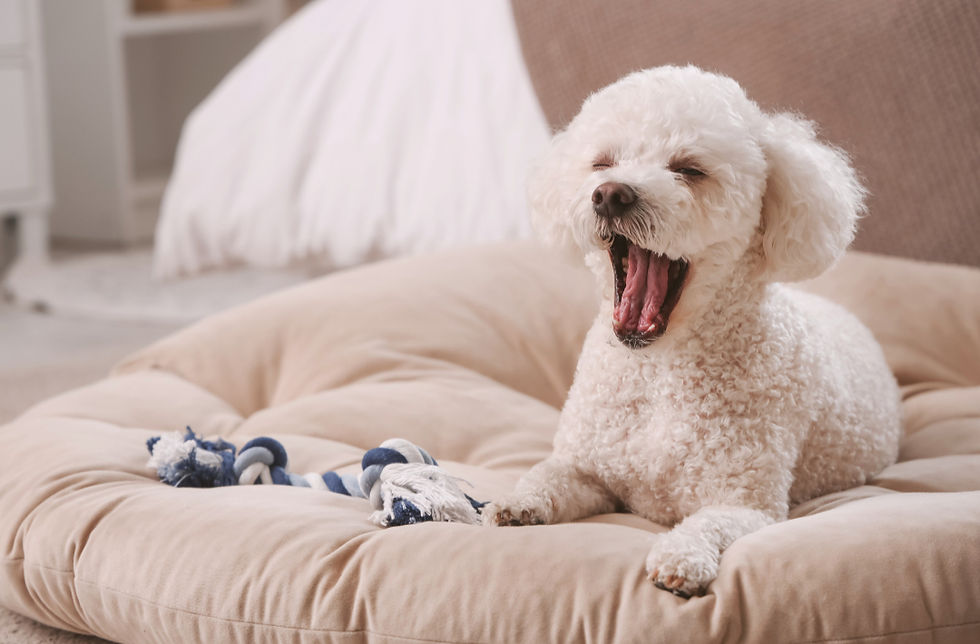
This is the highest-impact, lowest-risk thing most owners can do. Non-slip runners on hardwood or tile prevent the slipping and scrambling that aggravates arthritic joints. Ramps or pet stairs preserve access to couches and beds without the impact of jumping. Orthopedic bedding in a warm, draft-free spot supports joints during the many hours pets spend sleeping. For cats, a litter box with at least one low side makes an enormous difference.
Keep them moving gently and consistently.
For most pets with chronic joint pain, sustained inactivity accelerates muscle loss and worsens the underlying problem. Short, frequent, low-impact walks generally serve arthritic dogs better than one long outing. Consistency matters more than duration.

Pay attention to weight.
Weight management remains one of the most clinically effective interventions available for joint pain, and it's entirely within your control at home. Even modest weight loss produces measurable improvements in mobility and comfort in dogs with osteoarthritis.
Apply warmth carefully.
A warm compress or heating pad on a low setting can ease stiff joints, particularly in the morning. Always place a barrier between the heat source and your pet's skin, limit sessions to 10–15 minutes, and never leave a heating pad unattended with a pet who can't move away from it.
Keep a simple log.
Note what your pet is and isn't doing, including activities like stairs, jumping, sleep quality, appetite, and mood. Patterns over weeks are far more useful than impressions, and it gives us something concrete to work from when I'm back.

Together, these measures won't replace treatment, but they meaningfully reduce the daily load on your pet's body and often help maintain the progress we've made together.
Please Don't Do This
One thing I want to be emphatic about: never give your pet human pain medication. Ibuprofen, naproxen, and aspirin can cause severe gastrointestinal ulceration and kidney damage in dogs and cats. Acetaminophen is outright fatal to cats even in small doses.
If your pet's pain escalates while I'm out, call your primary veterinarian. According to the 2022 AAHA Pain Management Guidelines for Dogs and Cats, effective pain control depends on appropriate, species-specific medication, and safe, well-studied options are available.
Please don't try to manage a flare-up on your own.
See You After the New Year
Thank you, sincerely, for trusting me with your animals. Aloha Veterinary Acupuncture exists because of the families who've made it part of their pets' care, and I'm looking forward to picking back up in the new year.

In the meantime, Dr. Pelfrey at Louisville Veterinary Urgent Care is ready to help, and you can learn more about our veterinary acupuncture services and what to expect when I return.


Comments